


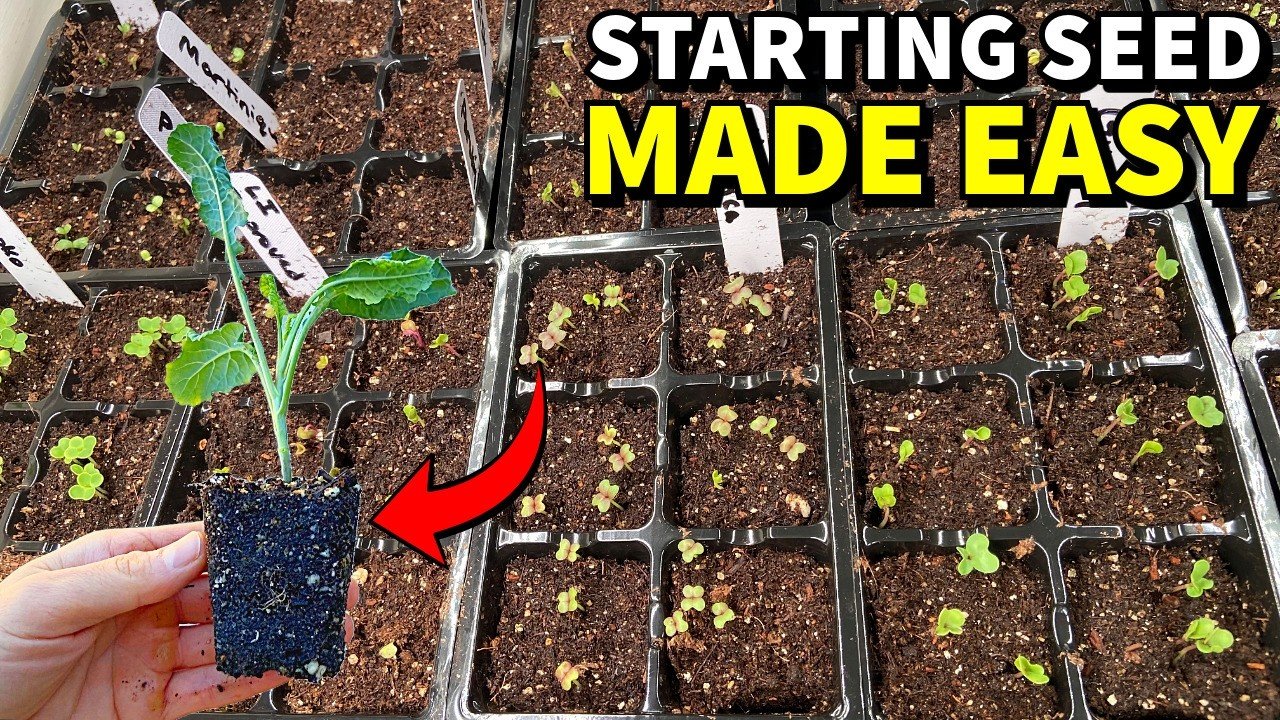
Seed starting is something else entirely. That moment a tiny speck cracks open and reaches toward light — it makes the whole season feel like it belongs to you. Beginners hit trouble fast, though. Wrong mix, dead seedlings, timing thrown off by weeks. All of it avoidable. Nail these five fundamentals before a single seed touches soil. You’ll sidestep most of the heartbreak that floors first-timers.
1. Seeds Need the Right Growing Medium and Containers
Standard garden soil? Won’t cut it. What young seeds actually need is something lightweight, sterile, and fast-draining — stuff those fragile first roots can physically push through without fighting. Bagged seed-starting mix does the job; grab it at any garden center. Prefer to mix your own? Combine peat moss or coconut coir with perlite and vermiculite. Whichever route you take, drainage holes aren’t optional. Water pooling at the bottom rots roots fast. Small plastic trays, peat pots, cell packs — all solid. Recycled yogurt cups and egg cartons work too. Just punch holes in the bottom first.
2. Light and Temperature Are Critical for Strong Seedling Growth
A windowsill usually isn’t enough. Seedlings running short on light go leggy — pale, spindly, structurally weak stems that buckle under their own weight. A grow light hung just inches above the trays, running 12 to 16 hours daily, changes everything. Compact, sturdy plants. That’s what you’re after. Temperature matters just as much. Most seeds germinate reliably somewhere between 65 and 75 degrees Fahrenheit. A heat mat tucked under the trays delivers that bottom warmth — the kind many varieties simply won’t sprout without.
3. Watering Seedlings Requires Care and Attention
Overwatering kills more seedlings than almost anything else. Soggy soil invites root rot and fungal disease. Both move fast. Bottom watering is the smarter approach: set trays in a shallow dish of water and let the soil wick moisture upward on its own. Leaves stay dry — and that matters. Wet foliage triggers damping off, a fungal condition that cuts seedlings right at the soil line. A spray bottle handles surface moisture. Light misting, daily checks. Let the top layer dry out just slightly between sessions. Moist, not soaked. That’s the target.
4. Hardening Off Prepares Seedlings for the Outdoors
Indoor seedlings are soft. No wind, no direct sun, no temperature swings — nothing has toughened them up. Shove them outside without warning and they’ll wilt, sunburn, or stall completely. Hardening off is how you fix that. Over seven to ten days, you introduce outdoor conditions bit by bit — an hour or two in a shaded, sheltered spot at first, then longer stretches each day, gradually pushing toward stronger light and real exposure. By the final days, full sun barely registers as a shock. Start the process roughly a week before your expected last frost date.
5. Timing Your Seed Starting Ensures Plants Are Ready When You Need Them
Start too early and seedlings get root-bound, cramped with nowhere to go. Too late and the window’s gone. Most vegetables and flowers want a six-to-eight week indoor head start before the last spring frost — though that shifts by plant. Your local frost date is easy to find online by searching your growing zone, or through a cooperative extension office. Seed packets spell out start times and germination windows; actually read them. Gardeners working with quality seed sources should know that weed seeds, like all seeds, perform best when they carry verified genetics and consistent germination standards — so where you source them genuinely matters. Nail the timing, and your seedlings hit transplant size exactly when outdoor conditions finally cooperate.
Conclusion
Seed starting opens doors. Varieties you’d never find at a nursery. Plants matched to your specific space and palate. A season that actually feels like yours. These five concepts — the right medium, proper light and heat, careful watering, hardening off, smart timing — don’t just carry you through one decent season. They’re the foundation everything else gets stacked on. Methods shift as experience builds; preferences evolve. But these principles? They hold.
