


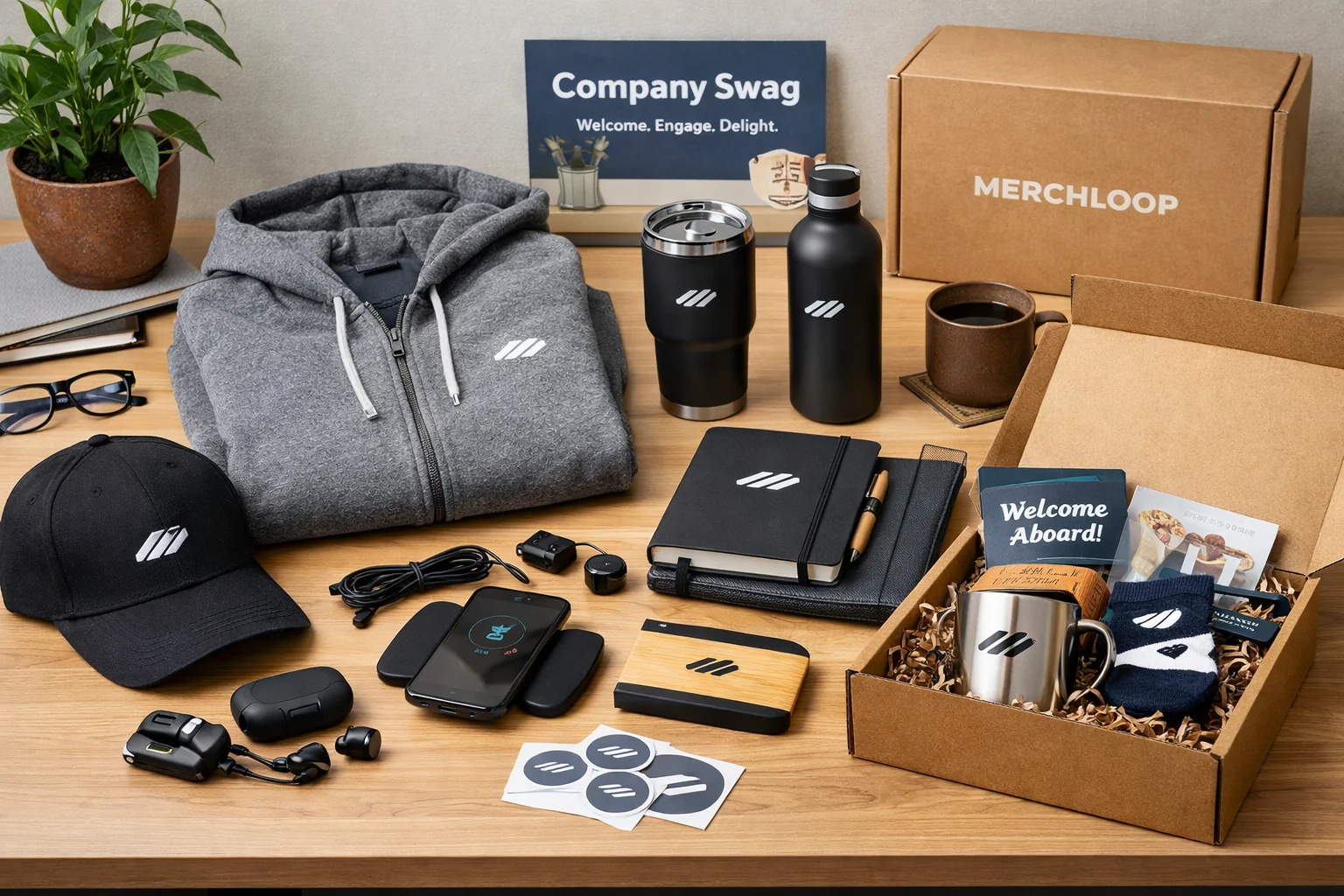
Most organizations hand out branded merchandise and assume the job is done. Box delivered, morale boosted, right? Not quite. A lot of companies are realizing that bulk distribution leaves real value on the table — and that giving employees a spending code to pick their own swag is a fundamentally smarter play. People have different tastes. Different lives. A mass shipment of identical water bottles doesn’t account for any of that. So let’s look at why the code-based approach keeps winning.
1. Employees Choose Items They Actually Want to Use
Hand someone a predetermined product and there’s a decent chance it ends up in a drawer. Give them a code, though, and they’ll pick something they’ll actually reach for. An employee who lives at the gym grabs a water bottle. Someone who spends eight hours at a desk goes for a quality mousepad or a nice mug. That distinction matters — a lot. Items chosen by the person using them get worn in public, placed on desks, carried around. Your logo moves through the world instead of collecting dust. Authentic exposure beats forced distribution every time.
2. Reduces Waste and Inventory Challenges
Bulk orders are a gamble. You’re guessing at quantities, guessing at preferences, and when the guesses are wrong — and they often are — you’re left with boxes of surplus merchandise nobody wants. Code-based programs sidestep that entirely. You pay only for what employees actually redeem. No warehouse space eating costs. No end-of-year scramble to offload excess stock. The budget you set aside goes toward merchandise that genuinely gets used, which makes every dollar work harder.
3. Accommodates Diverse Preferences and Needs
Your team isn’t a monolith. A field technician needs rugged gear; an office-based employee might want something sharp enough for a client meeting. Sizes vary. Color preferences vary. Work contexts vary wildly. Standard bulk orders almost never capture all of that — someone always gets a shirt that doesn’t fit or a style they’d never wear. Spending codes fix this. Everyone finds something that actually works for them. And that sends a quiet but meaningful signal: the organization sees people as individuals, not just headcounts.
4. Increases Employee Engagement and Satisfaction
There’s something different about choosing versus receiving. Passive receipt of a predetermined item feels transactional. Browsing options, weighing choices, landing on something you want — that process creates a small but real sense of ownership. Employees feel heard. They feel like the program was designed with them in mind rather than for administrative convenience. Organizations that set up an effective swag store with codes for employees to use for payment consistently find that the selection experience itself becomes a meaningful touchpoint — not just the item at the end of it. Employee experience professionals have noted this repeatedly: autonomy in reward selection drives satisfaction in ways that standard gift drops simply don’t.
5. Simplifies Logistics and Distribution
Coordinating bulk shipments to a dozen office locations — or worse, to hundreds of remote employees scattered across time zones — is a logistical headache. Returns, wrong sizes, missed addresses. It adds up. Code-based systems cut through all of it. Employees redeem online and have items shipped wherever they want. HR doesn’t have to manage handout schedules or track down who got what. The whole process gets lighter, faster, and far less prone to the friction that makes traditional distribution so draining on internal resources.
6. Provides Flexibility for Changing Preferences and Seasons
Bulk merchandise locks in your choices months ahead of time. By the time a winter jacket order arrives, half the team has moved to warmer climates or switched to remote work. Spending codes don’t have that problem. Employees redeem when it’s relevant to them — grabbing a fleece in January or a lightweight tote in July. Circumstances shift. People change roles, move cities, adjust their routines. A code-based program bends with all of that instead of becoming obsolete the moment conditions change.
7. Enables Better Tracking and Program Evaluation
Here’s something bulk distribution simply can’t give you: real data. When employees choose their own items, you see exactly what’s popular, what’s ignored, and where your budget actually lands. Redemption rates, trending products, patterns by department or role — it’s all trackable. That’s information you can use. The Society for Human Resource Management has pointed to employee choice as a key driver of recognition program effectiveness, and data from code-based programs lets you act on that insight rather than just theorize about it. You can iterate. Improve. Pull underperforming items and add ones that resonate. The program gets smarter over time instead of stagnating.
Conclusion
Switching from bulk merchandise distribution to a code-based system isn’t just a logistics upgrade — it’s a different philosophy entirely. It treats employees as people with real preferences rather than recipients of whatever the procurement team ordered six months ago. Waste drops. Satisfaction climbs. Your swag actually gets used instead of stuffed in a closet. And the data you collect along the way makes every future decision sharper. It’s a small operational shift with an outsized impact on how your team experiences recognition — and on how far your brand actually travels.
